
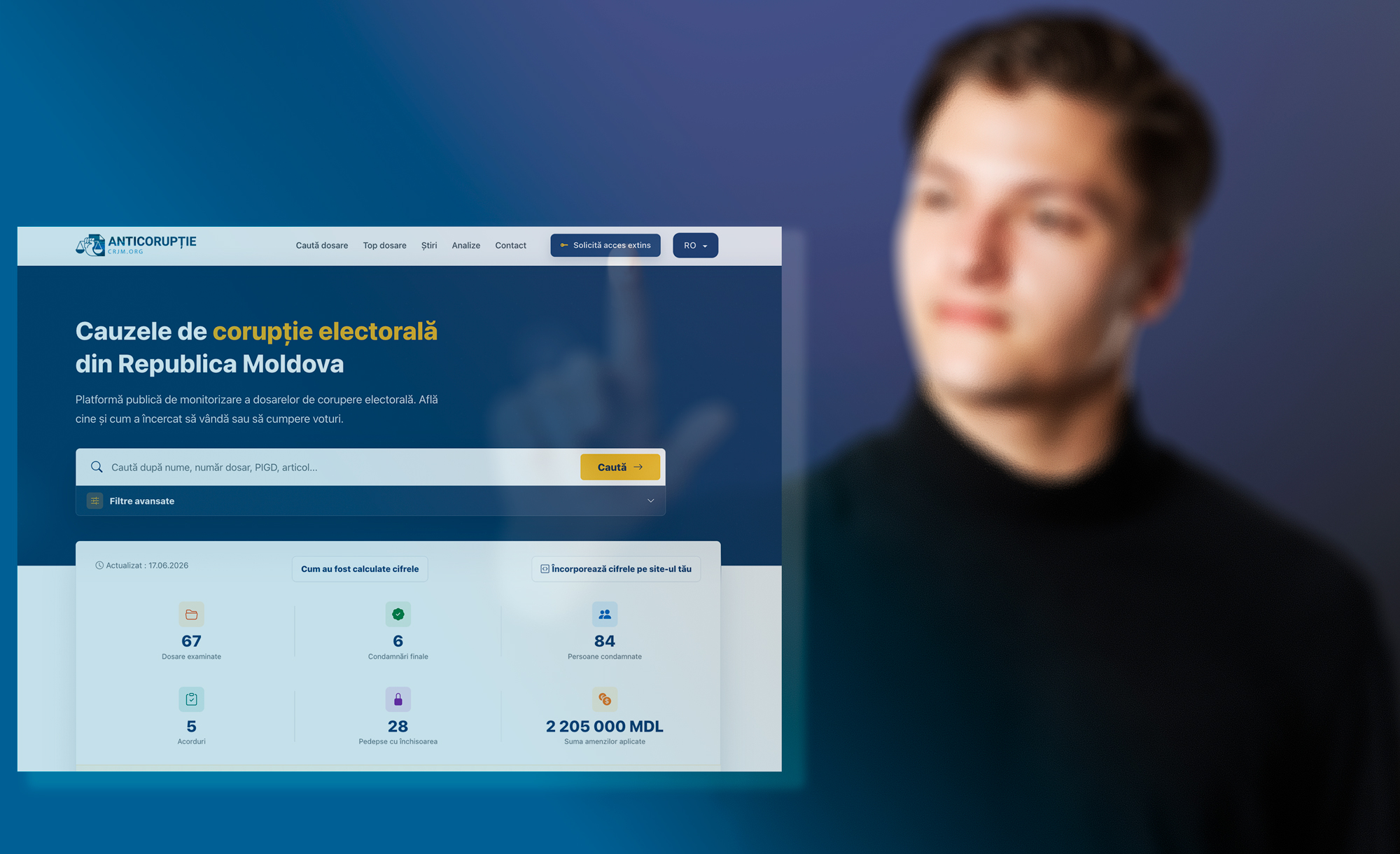
Electoral corruption has always been a topic of public debate during elections, but it became particularly prominent in the most recent electoral cycles: the 2024 constitutional referendum and presidential election, as well as the 2025 parliamentary elections. However, public attention to vote buying tends to decline shortly after elections, and until now there has been no dedicated tool for monitoring the investigated cases.
The Legal Resources Centre from Moldova has developed anticoruptie.crjm.org, a platform that systematizes electoral corruption cases and provides access to structured data and information on cases concerning voter bribery, illegal party financing, breaches of electoral finance rules and other cases relevant to the integrity of elections.
The data is collected by LRCM legal experts from public and official sources, then systematized in a format that can be consulted by journalists, experts, civil society organizations, public authorities, development partners and interested citizens.
On anticoruptie.crjm.org, users can search cases by the names of the persons concerned, case number, PIGD number, article of the Criminal Code or other keywords. The platform also allows users to filter cases by procedural stage, verdict, locality, persons concerned, judicial actors, applicable legal provisions and other relevant criteria. In this way, legal information that is often difficult to track across separate sources becomes more accessible and easier to analyse.
Each case included on the platform is structured to provide a clear and comprehensive overview of its development and contains:
- a factual summary of the case
- the applicable legal grounds
- the institutions involved
- the procedural stage of the case
- the case chronology
- available court decisions
- appeal mechanisms used or available
- any seizure or confiscation measures
- other information relevant to understanding the development of the case
The platform also includes thematic analyses, news on important developments and aggregated data that may indicate trends in the examination of electoral corruption cases.
According to the data displayed on the platform at the end of June, anticoruptie.crjm.org monitors 67 examined cases, 6 final convictions, 84 convicted persons and fines totalling MDL 2,205,000. These figures are presented as monitoring data and may be updated as new public information or procedural developments become available. LRCM legal experts and the platform development team will update the data regularly, depending on new developments in the cases.
The platform is not an official database of the public authorities and does not determine the guilt of the persons concerned. Its role is to organize public information, track the development of cases and contribute to the transparency of judicial proceedings related to electoral corruption. Any person concerned in a case benefits from the presumption of innocence until a final court judgment is delivered, in accordance with the law.
Through this tool, LRCM aims to contribute to better public documentation of the phenomenon of electoral corruption and to a more informed discussion about how institutions investigate, examine and sanction such offences. For journalists, the platform can serve as a documentation source; for experts, as an analytical tool; and for citizens, as a way to understand what happens after cases of election-related corruption are reported or investigated.
All those who wish to explore the platform’s data in greater detail or contribute to the development of its content are encouraged to request extended access to the platform.